45 how to read japanese food labels
Types of Sake and How to Read Their Labels | Special | "Kampai" at Kyushu Less Than 60% or. Special Production Methods. A Flavor; A Particularly Favorable Color and Luster. Honjozo-Shu. Less Than 70%. A Flavor; A Favorable Color and Luster. Sake can be divided into 4 main types. Although the ingredients are simply water and rice, complex flavors can be expressed, depending on the method of production. Beginners Guide to Supermarket Shopping in Japan - GaijinPot Blog The label below is used to explain what allergies may be triggered by the product if consumed. The allergies that could be triggered are written in black on the yellow background. Most processed foods will have this sign, or one similar to it, to let you know of the possible dangers for those with allergies.
Expiry dates | The Japan Times Jan 20, 2014 Dear Alice, My teenage daughter recently turned into a food-label tyrant, apparently convinced that her doddering old parents aren't up to the job of maintaining a safe kitchen. She...

How to read japanese food labels
Food Allergies in Japan: How to Read Japanese Food Labels The complete list of twenty additional allergens is as follows: 1. Abalone 2. Apple 3. Banana 4. Beef 5. Cashew Nut 6. Chicken 7. Gelatin 8. Kiwi 9. Mackerel 10. Matsutake mushroom 11. Orange 12. Peach 13. Pork 14. Salmon 15. Salmon roe 16. Sesame 17. Soy 18. Squid 19. Yam 20. Walnut Labeling of Beer|Brewery Convention of Japan - Brewers Association of ... Currently, each beer manufacturer observes labeling legislation based on the above Cord. In July 1995, the Product Liability (PL) Law came into effect. This was an attempt to systematically protect consumers from accidents involving products. Though information had previously been shown on labels concerning product handling, unified labeling ... Japanese Supermarket Guide: Must-Know Phrases, Food Label Breakdown ... In Japan, it's pretty easy to find regular cow milk (牛乳), soy milk (豆乳), and almond milk (アーモンドミルク). Cow milk in Japan comes in a wide variety, from those fortified with iron (鉄) or calcium (カルシウム), to low-fat products (低脂肪). To check exactly how much fat your milk has, look out for the fat content label (乳脂肪分).
How to read japanese food labels. Food Labelling - CFS According to paragraph 2 (6) of Schedule 3 to the Food and Drugs (Composition and Labelling) Regulations, Cap.132W, colour should be labelled as "色素" instead of "著色劑"in Chinese. Also, according to paragraph 4 (7) (c) of Schedule 3 to the same Regulations, "年" should be used as Chinese date format instead of "西元年" or "公元年". How to Identify Japanese Pottery Porcelain Marks | Hunker Unless you're familiar with the Japanese language, identifying Japanese pottery and porcelain marks can be a daunting task. Hidden within the kanji-- the characters -- on the bottom of the piece you will typically find the production region, a specific kiln location, a potter's name, and sometimes a separate decorator's identity.But, at times only generic terms were recorded, and tracking down ... Japanese Addresses: How to Read, Write, Say & Understand Them Most often, your prefecture, or "ken," will be selected from a dropdown menu, and the rest will require manual input. You will likely need to know the Japanese characters for the prefecture you are selecting. In this example, the address below would be input as follows: 〒106-0041 東京都港区麻布台1丁目9番地2号. How To Read Sake Label • Steamy Kitchen Recipes Giveaways On the front, you'll see "Takasago" on the left bottle. That happens to be the brewery's name. If you're not familiar with Japanese or brewery names, this might be difficult to spot. But what's important on the front of the label is the GRADE of sake. For premium, artisan sake, look for the words "Junmai" or "Junmai Daiginjo."
Reading Nutritional Labels in Japan vs the US This one is easy to identify because the number is followed by kcal. たんぱく質 (tanpakushitsu) is equivalent to protein. 脂質 (shishitsu) is total fat and is calculated in grams (just as it is in the United States). 炭水化物 (tansuikabutsu) is carbohydrates. The Ultimate Guide to Reading Food Labels in Japan Most labels similar to this type will then list total protein (たん白質), fat ( 脂質), carbohydrates (炭水化物), and sodium (ナトリウム), and some will list sugar, but many count sugar under the "carbohydrate" category and don't always split them so you can see how much of the carbs are sugars. It varies though. How to Read Japanese Nutrition Labels - Japan Living Guide To this end, you should check the amount of carbs and sugar contained in your food and beverages. On a nutrition label, "carbohydrate" means the sum of "sugar" and "dietary fiber". Sugars Sugars (糖質, toshitsu) are contained in cereals, potatoes, rice, sugar, etc. They are nutrients which are our energy sources. Reading Japanese Food Labels | JustBento Reading Japanese Food Labels. Submitted by anon. on Sat, 2009-09-05 07:24. I live in Japan and have trouble reading and understanding everything on food labels. Do you know if partially hydrogenated oils are used in Japanese foods, such as packaged cookies? Do you know what the word for it or "trans fat" is in Japanese or how to write it?
Tokyo Guide: How To Read Japanese Food Labels One of the first things that people look for on a label is the calorie content of that food. Japan uses the same system as the rest of the world, kcals, which is often represented as Calories, with a capital C, in the US. Weight loss and gain at the most basic level is a matter of calories into and calories out of the body. Food labelling | New Zealand Government Food labelling. Food labels help you make informed choices about the products you buy. The Ministry for Primary Industries website has information about food labelling. Find out what each part of the label means and what to do if you find a problem with a food label. How to read food labels. Last updated 19 January 2022. What's on a food label | NSW Food Authority How to read a label What's on a food label What's on a food label Food name The name of a food must be sufficient to indicate its true nature. For example, 'fruit yoghurt' should contain fruit. If it is fruit flavouring, the product should say 'fruit flavoured yoghurt'. For more visit FSANZ. Reading Japanese Food Labels - Allergens and Tips - Best Living Japan Food labels are 食品表示 (しょくひんひょうじ shokuhin hyou ji) in Japanese. Let's take a look at a food label before going on into the various parts of Japanese food labels and how to read them. Below is the label to a popular brand of barley (mugi) tea. Lots of text here, but if you look closely the label actually consists of 2 parts.
The Ultimate Guide to Reading Food Labels in Japan | Surviving in Japan: (without much Japanese ...
How to read a label | NSW Food Authority The country or countries where a food was grown, manufactured or packaged must appear on the label. Directions for use Directions for use must be included when there are health and safety reasons for doing so. Alcohol Alcohol labels must state the number of standard drinks and % of alcohol, and comply with general labelling laws.

Free Menus Stock Vectors | StockUnlimited
HOW TO: Find Allergy-Friendly Food in Japan 1. Prepackaged processed food (chips, orange juice cartons, cookies, etc.) 2. Canned or Jarred processed food (jam, baby food, etc.) If a product contains a miniscule amount of one of the seven allergens it will be marked; however, if it contains just a few milligrams per kilogram it will not be marked.

Japanese New Food Labeling System Effective Since April 1, 2020 | ChemLinked
Food Allergies in Japan: How to Enjoy Traveling Safely with a Food ... The food labeling system in Japan has different requirements and only 7 core allergens are required to be labelled. A list of allergenic foods in Japan is: eggs, milk, wheat, buckwheat, peanuts, shrimp and crab. Some allergens can be listed using very different forms, such as 落花生 and ピーナッツ - both of which refer to peanuts.

FYI: Zuma, japanese restaurant
How to Read a Label for a Sesame-Free Diet - Food Allergy Research ... Crackers (such as melba toast and sesame snap bars) Dipping sauces (such as baba ghanoush, hummus and tahini sauce) Dressings, gravies, marinades and sauces Ethnic foods such as flavored rice, noodles, risotto, shish kebabs, stews and stir fry Falafel Goma-dofu (Japanese dessert) Herbs and herbal drinks Margarine Pasteli (Greek dessert)

Thanks For Visiting ~ Thanks For Commenting ~ Thanks For Everything
Quick Guide: Know And Understand Food Allergies In Japan The top seven. This listing will state whether the product contains any of the following ingredients, which are classified as severe allergic-reaction-causing foods in Japan. These are typically the "emergency reaction" foods, that can cause immediate anaphylaxis and should be avoided at all costs by those with allergies. Japanese. Romaji.
![Rain(Bi) | Love Song [HQ:MV] (ENG SUB)](http://img.youtube.com/vi/wx2lnZ_WjkA/0.jpg)
Rain(Bi) | Love Song [HQ:MV] (ENG SUB)
How to Read Nutrition Labels - Top 10 Facts - NDTV Food Saccharin, Aspartame, Acesulfame-K, Sucralose, Neotame, Glycerol, Erythritol, Maltitol, Lactitol. ( Top 10 must-know facts about Aspartame) 9. MSG or Monosodium Glutamate - It is used as a flavor enhancer and is found in salad dressings, ready-to-eat soups, canned vegetables and chips.
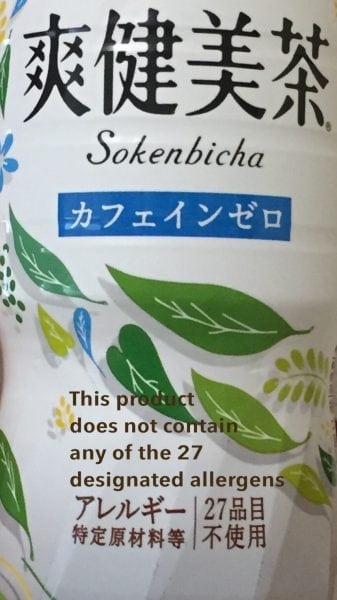
Reading Japanese Food Labels - Allergens and Tips
How to Read a Dog Food Label - American Kennel Club The quantity listed on the label tells you how much of the food is in the container. This may be measured by weight, liquid measure, or by count. Products can vary in density (think wet food vs....

How to Read Japanese Nutrition Labels - PLAZA HOMES
Japanese Decoded: Nutrition Labels - Savvy Tokyo Below is the back of a bag of rice crackers (senbei) carrying a standard Japanese nutrition label. On the top left, we see the nutritional information (栄養成分表, eiyou seibun you), which contains all the basic nutrition facts about the product, such as grams of carbohydrates, protein, and fat.
Personalized Red Japanese Bamboo Chopsticks: HansonEllis.com
Pick the right fish for your dish - How to read seafood labels in Japan ... You often see the lables of "生食用" (for raw food), "刺身用" (for sashimi), "加熱用" (for heating), "焼き魚用" (for grill) on seafood packaging in Japanese supermarkets. Here we explain the differences when purchasing the perfect seafood for your meal. For raw food (Namashokuyou) This lable literally means that you can eat it raw.

Reading Japanese Food Labels | Nutrition Facts Label | Food Allergy
Guide to Your Japanese Food Label Vocabulary | Coto Academy Guide to Your Japanese Food Labels Guide to your Japanese Bathtubs Vocabulary: エネルギー (enerugi-) Energy たんぱく質 (tanpakushitsu) Protein 脂質 (shishitsu) Fat 炭水化物 (tansuikabutsu) Carbohydrate 糖質 (toushitsu) Sugar 食物繊維 (shokubutsuseni) Fiber 食塩 (shokuen) Sodium 低カロリー (teikarori-) Low Calorie 高たんぱく質 (koutanpakushitsu) High Protein 無糖 (mutou) No Sugar

Japanese Stickers + Korean Stickers | Korean stickers, Aesthetic stickers, Bullet journal stickers
Japanese Supermarket Guide: Must-Know Phrases, Food Label Breakdown ... In Japan, it's pretty easy to find regular cow milk (牛乳), soy milk (豆乳), and almond milk (アーモンドミルク). Cow milk in Japan comes in a wide variety, from those fortified with iron (鉄) or calcium (カルシウム), to low-fat products (低脂肪). To check exactly how much fat your milk has, look out for the fat content label (乳脂肪分).

Collection of japanese food labels Vector Image - 1543778 | StockUnlimited
Labeling of Beer|Brewery Convention of Japan - Brewers Association of ... Currently, each beer manufacturer observes labeling legislation based on the above Cord. In July 1995, the Product Liability (PL) Law came into effect. This was an attempt to systematically protect consumers from accidents involving products. Though information had previously been shown on labels concerning product handling, unified labeling ...

Almond Chicken Recipe
Food Allergies in Japan: How to Read Japanese Food Labels The complete list of twenty additional allergens is as follows: 1. Abalone 2. Apple 3. Banana 4. Beef 5. Cashew Nut 6. Chicken 7. Gelatin 8. Kiwi 9. Mackerel 10. Matsutake mushroom 11. Orange 12. Peach 13. Pork 14. Salmon 15. Salmon roe 16. Sesame 17. Soy 18. Squid 19. Yam 20. Walnut

meta content=' khmer sexy hot star khmer khmer fuck student sexy super star Girl Asian, hot asia ...

Kimoto Gastro Bar: Enjoy Affordable Kushiyaki & Tempura In The Sail @ Marina Bay
Post a Comment for "45 how to read japanese food labels"