42 nutrient content claims on food labels
Consumers' Interpretation of Food Labels with Production Claims Can ... Grass-fed is another production claim that is sometimes labeled on beef products. Grass-fed refers to beef derived from cattle primarily raised on a grass-fed diet. Consumers may be drawn to grass-fed beef for various reasons, such as nutritional values, taste, animal welfare, and environmental concerns. Food Labeling & Nutrition | FDA Food labeling is required for most prepared foods, such as breads, cereals, canned and frozen foods, snacks, desserts, drinks, etc. Nutrition labeling for raw produce (fruits and vegetables) and...
Nutrient Content Claims | FDA Nutrient Content Claims. See Claims That Can Be Made for Conventional Foods and Dietary Supplements for definitions of claims. Final Rule: Food Labeling: Nutrient Content Claims; Alpha-Linolenic ...
Nutrient content claims on food labels
Code of Federal Regulations Title 21 - Food and Drug Administration (g) Nutrient content claims using the term "antioxidant." A nutrient content claim that characterizes the level of antioxidant nutrients present in a food may be used on the label or in the... Assessment of Knowledge and Self-Reported Use of Nutrition Facts Label ... optimal nutrition intake is one of the main lifestyle factors that contribute to a reduced incidence of obesity and noncommunicable diseases. 1 nutrition facts, nutrient content, and health claims (nhcs) on food labels may be an effective tool for communicating nutritional information to consumers. 2 thus, the effort of public health agencies to … 13 Misleading Food Label Claims and How Not to Be Tricked 20/10/2021 · Unfortunately, food labels frequently use carefully crafted language that attracts and misleads consumers as a sales tactic. During the ongoing COVID-19 pandemic, consumers’ interest in healthful eating has increased.In addition to growing interest in gut health and eating for mental health, consumers are choosing more plant-based foods, helping plant-based eating …
Nutrient content claims on food labels. inspection.canada.ca › food-labels › labellingDietary fibre claims - Specific nutrient content claim ... (c) the difference in fibre with the reference food of the same food group or the similar reference food, expressed by percentage or fraction or in grams per serving of stated size. (See Comparative nutrient content claims for more information.) See conditions set out in column 3 for item a) of this table. Table following B.01.513, item 44 New Nutrient Content Information Now Online | USDA The USDA manages a nutrient database called FoodData Central. This database is developed and supported by the Agricultural Research Service at USDA and provides information about food composition. With this database, you can search a food to see its nutrition content, including calories, fiber, vitamins, minerals, caffeine, and more. › scripts › cdrhCFR - Code of Federal Regulations Title 21 - Food and Drug ... Mar 29, 2022 · (b) Label statements that are not implied claims. Certain label statements about the nature of a product are not nutrient content claims unless such statements are made in a context that would make them an implied claim under § 101.13(b)(2). The following types of label statements are generally not implied nutrient content claims and, as such ... › scripts › cdrhCFR - Code of Federal Regulations Title 21 - Food and Drug ... Mar 29, 2022 · A claim about the calorie or sugar content of a food may only be made on the label or in the labeling of a food if: (1) The claim uses one of the terms defined in this section in accordance with the definition for that term; (2) The claim is made in accordance with the general requirements for nutrient content claims in § 101.13;
13 Misleading Food Label Claims and How Not to Be Tricked To use the label low-calorie in the United States, the FDA mandates that foods contain 40 calories or less per reference amount customarily consumed ( RACC ). Meals and main dishes should include 120 calories or less per 100 grams of food. 6. Label Says "Low-Carb" The FDA does not have any guidelines for the labeling of foods as low-carb. Understanding Food Labels | The Nutrition Source | Harvard T.H. The FDA has approved 12 health claims on food labels such as the relationship between calcium and osteoporosis; sodium and hypertension; fiber-containing grains, fruits and vegetables and cancer; and folic acid and neural tube defects. However, just because a food contains a specific nutrient that is associated with a decreased risk of disease does not necessarily make … Use of the Term Healthy on Food Labeling | FDA While FDA is considering how to redefine the term "healthy" as a nutrient content claim, food manufacturers can continue to use the term "healthy" on foods that meet the current regulatory... Nutrition Facts labels for food processors - Product Center Any packaged food product, except meat, that is manufactured by a company with $500,000 or less in annual sales is generally exempt from providing a Nutrition Facts label, unless the product makes some type of health or nutrition claim. A claim could be something such as the food is "low in fat" or "high in fiber."
› understanding-food-labelsUnderstanding food labels - Canada.ca Find information on food labels and how to understand them. Learn about nutrition facts tables, serving size, list of ingredients, % daily value and nutrition claims. CFR - Code of Federal Regulations Title 21 29/03/2022 · Sec. 101.65 Implied nutrient content claims and related label statements. (a) General requirements. An implied nutrient content claim can only be made on the label and in labeling of the food if: (1) The claim uses one of the terms described in this section in accordance with the definition for that term; (2) The claim is made in accordance with the general … Can food labels influence dietary choices? Color-coded labels and warning labels are in common use on the front of food packages globally. They aim to encourage people to eat more healthily to reduce the burden of diet-related illnesses ... Nutrition labels: Finding out about the food you eat Nutrient content claims describe how much of a specific nutrient is in a food. For example, 'A good source of fiber' or 'a high source of vitamin C'. Health claims describe the effect of food on health. The following are examples of health claims: A healthy diet low in sodium and high in potassium may reduce the risk of high blood pressure.
Nutrition Labelling and Marketing in Canada - Research Program for Nutrition Policy and ...
Code of Federal Regulations Title 21 - Food and Drug Administration (1) nutrient content claims that have not been defined by regulation and that are contained in the brand name of a specific food product that was the brand name in use on such food before october...

What Counts As 'Healthy' Food? FDA Reviewing Labeling Standards Following Industry Pushback
Health claims in a developing country context: 'Food labels are not a ... Amongst initiatives proposed to improve public health, food labels come up time and time again. From nutrition labelling schemes - such as Nutri-Score or traffic light labels - to nutrition and health claims, food labels are commonplace in developed countries. In developing countries, however, such labels can be less prevalent.
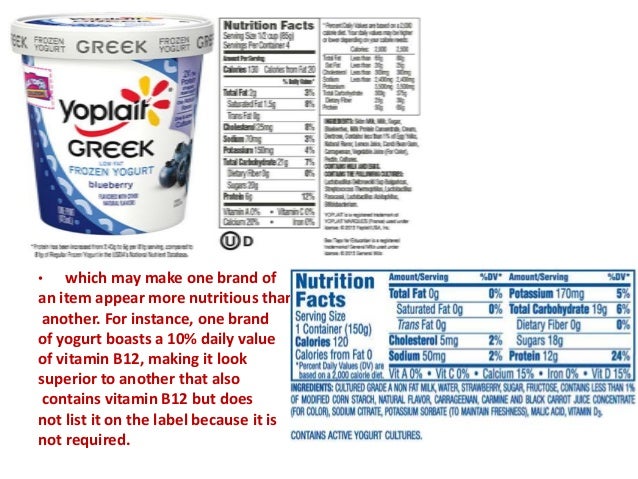
Interpret the reading of food labels and its
Don't Be Fooled by Food Labels - WebMD Appendix A: Definitions of Nutrient Content Claims)," "What is the meaning of 'natural' on the label of food?" GreenerChoices.org: "No additives." National Chicken Council: "Chickopedia: What ...
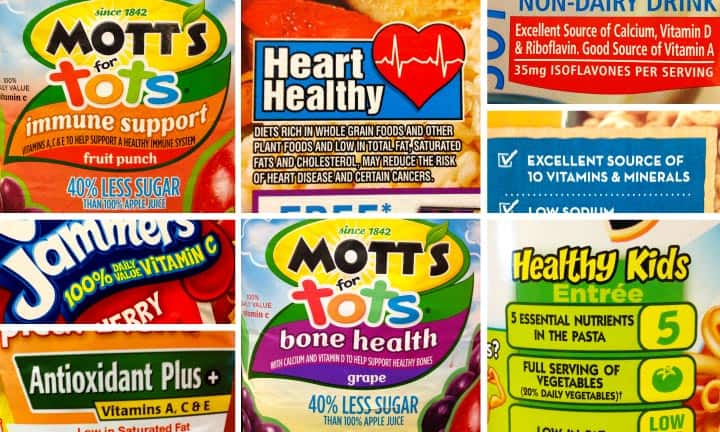
Demystifying Health Food Labels: What do they all mean? - The Picky Eater
Interactive Site Helps Consumers Digest Food Labels Vermont Law School's Center for Agriculture and Food Systems (CAFS) recently launched the Labels Unwrapped website to help consumers in the United States better understand labels on food packaging. The website helps readers learn about nutrient content claims, government and third-party regulation and certification, and expiry dates.
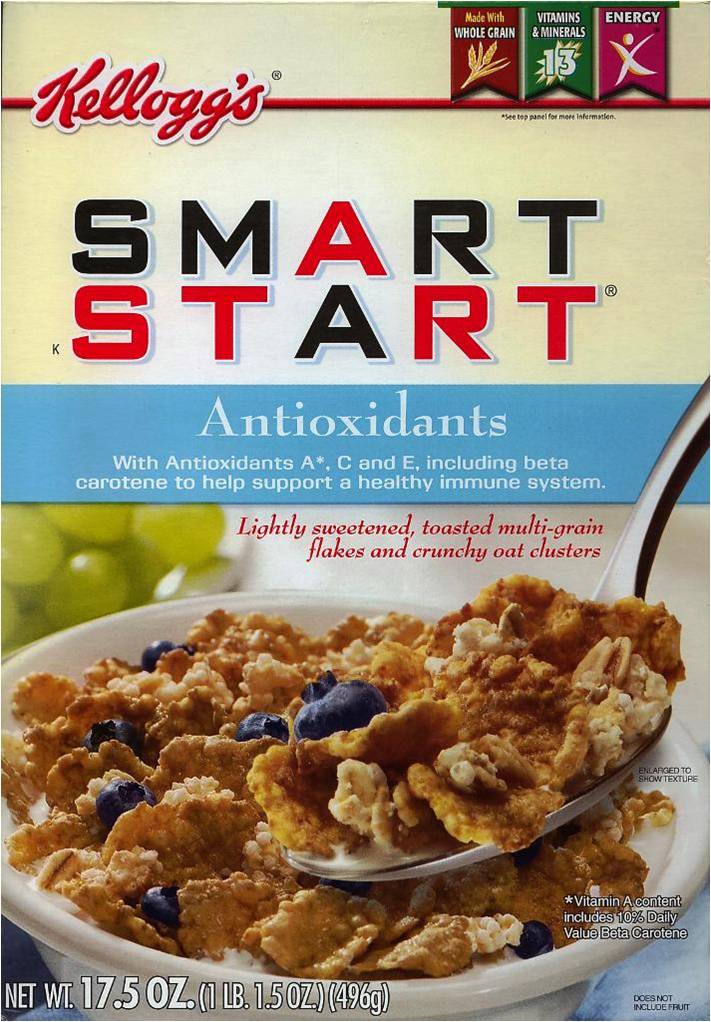
Food Politics by Marion Nestle » European decisions on health claims: Vitamins, yes ...
inspection.canada.ca › food-labels › labellingNutrient content claims - Canadian Food Inspection Agency Advertisements making vitamin and mineral nutrient content claims; Decision trees for nutrient content claim advertising requirements; Reference information. Foods to which vitamins, mineral nutrients and amino acids may or must be added; Nutrient content claim examples; Additional Information. Criteria for the nutrient content claim no added ...
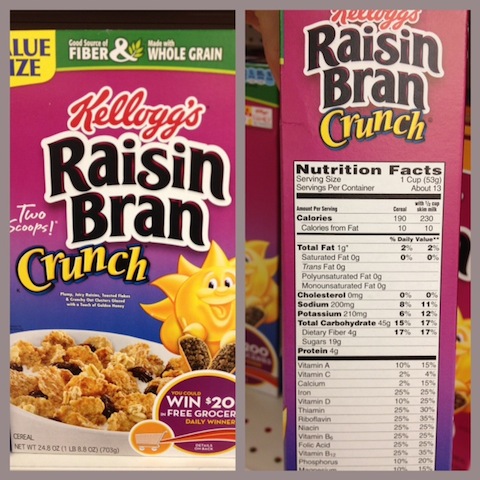
lower back pain
This Is How to Read a Nutrition Facts Label on the Keto Diet That's not a 33% fat, 33% carb, 33% protein ratio. It's actually 52% fat, 24% carb, 24% protein. This may sound a little confusing, but as long as you limit carbs (the most important part) and aim for healthy fats and protein to make up a majority of your daily macronutrient intake, your results should be excellent.
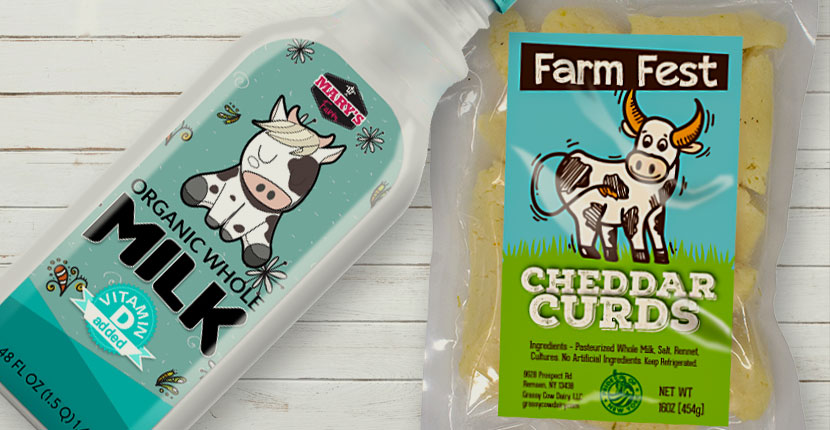
Dairy Labels by FoodPackagingLabels.net
How to Read Food Labels: Understanding Claims & Components These nutrients are followed by some key vitamins and minerals. The food label provides information on these vitamins and minerals as well as fiber because these are nutrients that most people do...
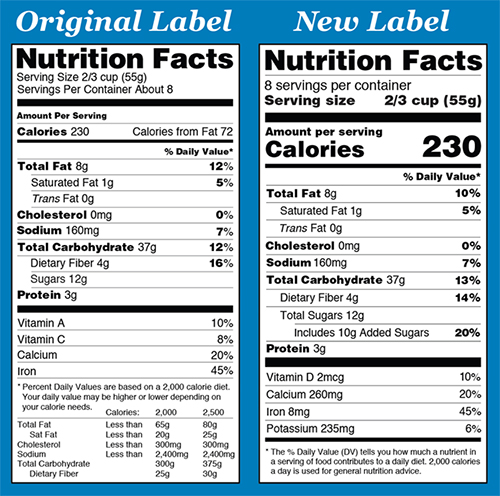
On Your Table Blog — NDFB — FDA's Nutrition Innovation Strategy
Dietary fibre claims - Specific nutrient content claim … Specific nutrient content claim requirements Dietary fibre claims Fibre sources; Note: the spelling "fibre" or "fiber" are both acceptable in the English statements or claims [B.01.503(4), FDR]. Comparative claims for dietary fibre may be made under the conditions described for "More fibre" claims in the Summary table of permitted fibre claims, item d) below.
Post a Comment for "42 nutrient content claims on food labels"